
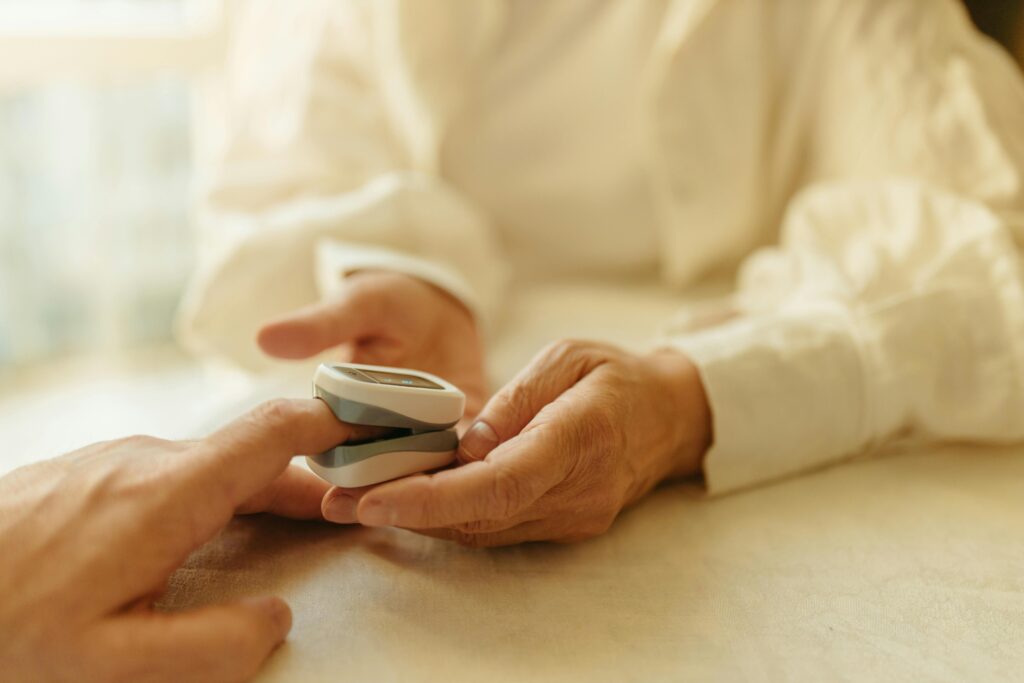
🫁 Monitoring Oxygen Levels in Senior Care – Non-Medical
Monitoring oxygen levels is an important non-medical support practice in senior care, especially for elderly individuals with limited mobility, breathing difficulties, or chronic conditions. While it does not replace medical treatment, regular oxygen monitoring helps caregivers identify early warning signs and ensure seniors remain comfortable and safe 👵👴
🤍 What Is Oxygen Level Monitoring?
Oxygen level monitoring measures blood oxygen saturation (SpO₂)—the amount of oxygen carried by red blood cells.
- Normal SpO₂ levels usually range between 95%–100%
- Slightly lower levels may be common in some seniors
Non-medical caregivers use pulse oximeters to observe trends and report concerns to families or healthcare professionals 🩺
🌿 Why Oxygen Monitoring Is Important in Senior Care
🫁 1. Early Identification of Breathing Issues
- Detects low oxygen levels before visible distress 😮💨
- Helps identify fatigue, shallow breathing, or discomfort
- Supports timely communication with medical professionals ⚠️
😌 2. Improves Comfort & Safety
- Ensures seniors are breathing comfortably 🛏️
- Reduces anxiety for seniors and families 💙
- Provides reassurance during rest or sleep 💤
👀 3. Helpful for Bedridden or Frail Seniors
- Bedridden seniors may have reduced lung expansion
- Monitoring helps caregivers adjust positioning 🔄
- Encourages proper posture to support breathing
🧑⚕️ 4. Supports Observation, Not Treatment
- Non-medical caregivers observe and record readings 📋
- No diagnosis or medical intervention is performed
- Any abnormal readings are promptly reported to families or doctors
🛡️ Safe Non-Medical Monitoring Practices
- Use clean, well-maintained pulse oximeters 🧼
- Measure oxygen levels during rest and comfort checks
- Ensure fingers are warm and relaxed for accurate readings ✋
- Observe related signs like breathlessness, fatigue, or bluish lips 👀
👨👩👧 Benefits for Families
Non-medical oxygen monitoring:
- Provides peace of mind 💙
- Helps track changes over time 📊
- Supports informed discussions with healthcare providers
- Reduces emergency surprises 🚨